
Anti-Addiction Campaign for a Capable and Empowered Society
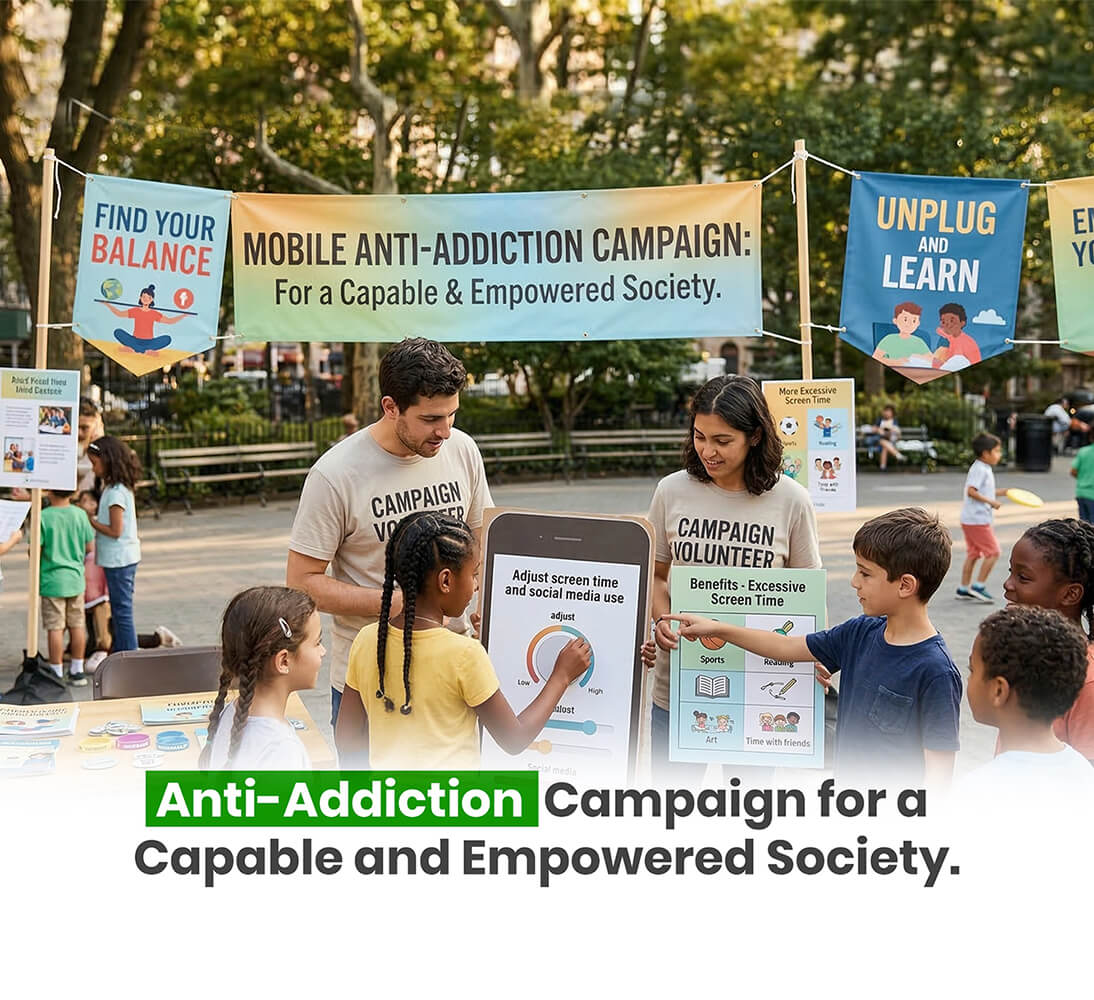
Dear Brothers and Sisters,
In our last magazine issue, we discussed how today's youth can draw inspiration from the life of Sardar Patel to move from spiritual consciousness to national pride. To ensure every individual ignites their own inner spark, it is vital to discuss the anti-addiction campaign—a movement essential for a capable and empowered society—within the context of our current times.
For years, our society has been caught in the suffocating grip of various addictions, sometimes knowingly and often unknowingly. Our old proverb, "Intoxication invites devastation," remains profoundly relevant today. We all understand the damage addiction causes, yet the number of people falling into its trap continues to rise rather than decline; most alarmingly, it is our youth who are being caught. Consequently, it has become a top priority for every level of society and every organisation to lead anti-addiction movements.
Alongside building temples, our organization is constantly engaged in various activities for social upliftment. However, alongside these efforts, fighting the social evils that plague our community is also a core part of our social responsibility. To that end, Vishv Umiyadham has prioritised the anti-addiction campaign during our monthly spiritual discourses (Kathas). We approach these spiritual discourses (Kathas) as a powerful medium for social reform, shedding light on the pressing issues of our times.
Our scriptures remind us that human life is a gift so rare that even the gods yearn for it. As Tulsidas Ji wrote: "It is a great fortune to have a human life; even the gods in the scriptures sing of its rarity."
Despite knowing this, many people fall prey to addiction, essentially inviting the ‘Yamaraj’ (God of Death) prematurely. Addiction is the state of the mind becoming enslaved by anything harmful or evil. It is not just about cigarettes, tobacco, or alcohol; it is becoming a prisoner to destructive habits. Addiction is a massive tool for self-destruction. People knowing the harmful consequences, yet they repeating the behaviour.
It is disheartening that instead of drawing inspiration from heroes like Bhagat Singh, Mahatma Gandhi, Rani of Jhansi, or Sardar Patel for inspiration, our youth often idolise the "so-called heroes" of movies. These actors promote tobacco or gutka on television for profit, and our innocent youth are lured into addiction by their influence. Addicted individuals do not just destroy themselves; they ruin their entire families. Eventually, to fund their habit, they may turn to crime, such as theft or robbery. Often, they drive while intoxicated, inviting fatal accidents.
There is a local saying regarding animals: "A camel knows what is poisonous, and a goat knows what is inedible." Yet, human—who considers himself the most intelligent creature—is the only one who refuses to let go of what is harmful; he will even "drink poison." In Sanskrit, the word for addiction (vyasan) literally translates to "great sorrow". Addiction is suffering in itself. Once a habit takes root, it is incredibly difficult to break. Some would rather face death than give up their addiction. In today’s fast-paced life, people often suffer from frustration, anxiety, and stress. To escape this, they turn to toxic substances like tobacco, opium, marijuana, or heroin—but friends, this is not the solution. A man works hard to earn money, only to spend that wealth on habits that invite disease.
We would never put kerosene in an expensive car because we know it would ruin the engine. If we care that much about a car, have we ever stopped to think about what tobacco, cigarettes, or alcohol do to our kidneys, liver, lungs, and mouth? We should care for this body—which cannot be replaced even for millions of dollars—at least as much as we care for our cars or bikes. To the world, you are just one person, but to your family, you are the whole world. Never forget this truth: addiction is the "address" where serious illness lives.
Our scriptures view the body as a temple of God. Therefore, a wise person must ensure that the "thief" of addiction does not break into this temple. The poet Kalidasa said: "The body is the primary means of performing one's duty (Dharma)." Health is the foundation of life; protecting it is our sacred duty. When health fails, wealth follows, because a sick person cannot think clearly. A healthy soul resides only in a healthy body. A diseased body cannot engage in spiritual reflection, spoiling one's peace in both this life and the next. This is why we must use the foundation of spirituality to raise awareness through this anti-addiction campaign; only then can we achieve real results. People rarely enjoy being given advice. Nevertheless, to make our society capable and strong, we must make a collective effort. I humbly appeal to every friend and member of the community to join us in this cause.