
Mobile Addiction in Young Children: A Serious Problem
Hello friends!
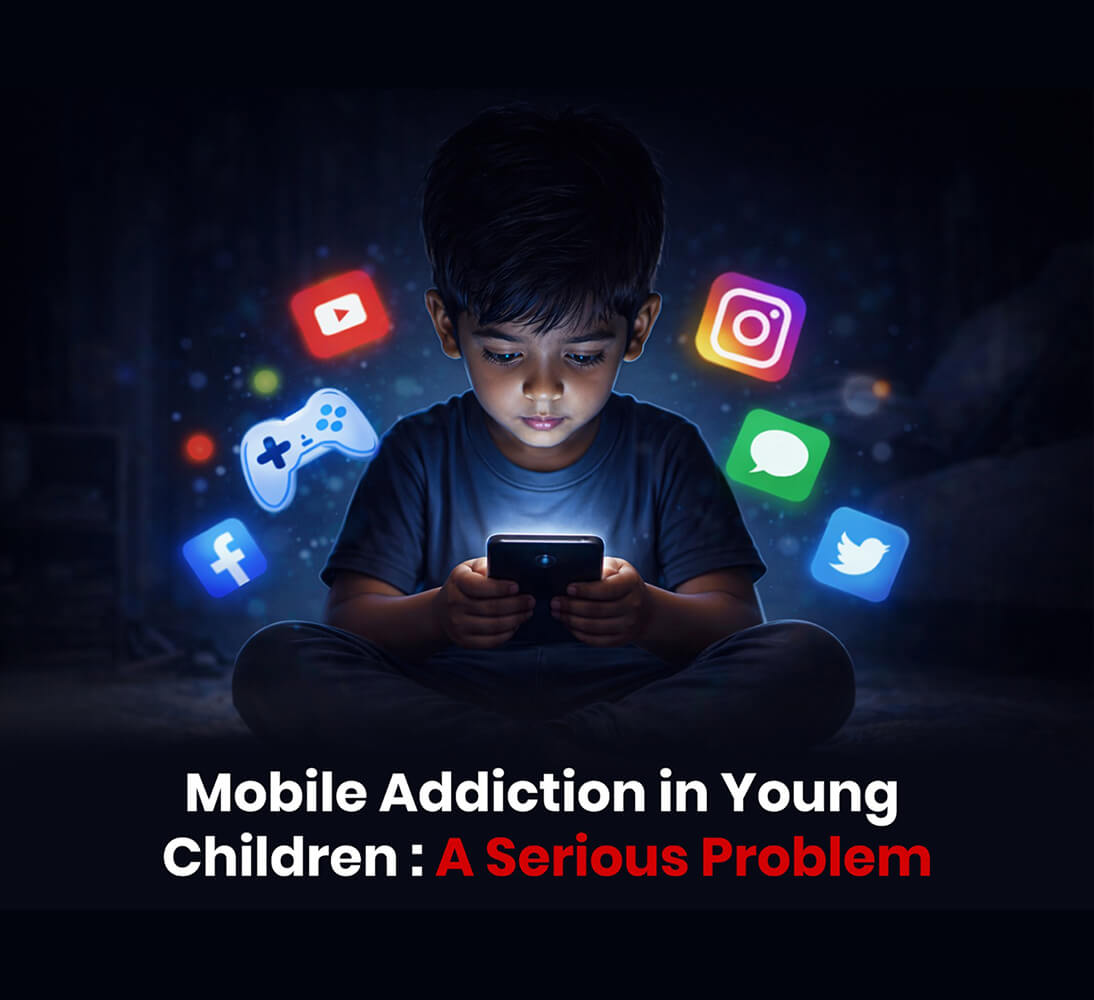
We all live in a digital and technological age where the internet and mobile phones have become an inseparable part of our lives. As science develops, people's lifestyles have changed completely. While mobiles have many benefits, they also have some disadvantages. This problem is particularly increasing among young children, which is dangerous for their physical and mental growth. Many children become addicted to mobile phones as early as the age of two or three. Watching cartoons, playing video games, or spending hours on YouTube has become normal.
Mobiles and Children: Mobile phones are mainly used for information, entertainment, and communication. However, many parents give phones to their children just to keep them quiet while they are busy with work. This is a major mistake, as an easy solution today becomes a serious problem later. Knowingly or unknowingly, we make children addicted to phones. A shocking study shows that over 54% of women give mobiles to their children while doing housework, leading to addiction. In reality, small children should not be given mobiles at all.
Mobile Mania: Mobile phones take away an average of two hours from a person’s daily life. People become so absorbed in their phones that they forget the world around them, sometimes even leading to self-harm or extreme life-ending steps. Cases of insomnia have increased by 10% to 15%. When mobile use is too high, children suffer from sadness, lack of sleep, irritability, aggressive behaviour, and depression. Parents must be very careful about this. Keeping children away from phones is a major concern today because children are becoming more stubborn. Parents now realise the harm, as children insist on having a phone just to eat or do homework.
Keeping children away from phones has become a major modern-day worry as kids grow more stubborn about using them. Parents are realising the harm as children refuse to eat or do homework unless they are given a phone. Today, children have developed the habit of eating only while using a mobile. If they don't get the phone, they often scream, throw tantrums, and behave badly. Increased use of computers and laptops has led to a rise in violent gaming. Psychologists report that this is causing an increase in psychopathic and anti-social behaviours in children. Shockingly, over 70% of patients seeking help from psychologists are now school-going children. Trends in online gaming and betting are also rising among children and youth. This exposes them to risks from antisocial elements like hackers. Excessive mobile use also increases the risk of becoming victims of cybercrime. The obsession is so high that children may take extreme, unexpected steps if parents scold them regarding phone use.
Every technology has pros and cons; for example, financial transactions are now faster and easier via mobile. If used properly, mobiles can actually help in a child's development. Creativity can be fostered by using apps for painting, Photoshop, or drawing. While technology is necessary, its overuse is proving to be harmful.
Impact on Physical Health
- Eye Diseases: In Gujarat, eye problems due to mobile use have tripled in the last five years. This includes issues like squinting, poor vision, dry eyes, redness, and a rapid increase in children needing glasses. Children often do not realise they have vision problems and continue to strain their eyes, which can lead to crossed eyes. Children wearing glasses have now become a very common sight.
- Obesity: Because children spend long hours on their phones instead of playing outside, the risk of obesity increases. Excessive use of mobile phones also harms children. Especially the eyes, ears, neck, back, and shoulders.
Impact on Mental Health
Decrease in communication ability: Children busy with mobiles do not take interest in talking with other people, which reduces their communication skills.
Decrease in social skills: Because of mobiles, children do not learn how to behave properly in social situations.
Impact on studies: By starting to watch games and videos on mobiles, children's focus on studies decreases, which can affect their career in the future.
Impact on family relationships:
Feeling of neglect: If parents themselves stay busy in mobiles, time with children decreases, which creates feelings of neglect and rejection in children.
Tension in relationships: Due to mobiles, communication between family members decreases, which creates tension in relationships.
Ways to prevent mobile addiction
Limit screen time: Children should be encouraged to develop the habit of using mobiles for a limited time. Experts recommend one hour a day for children under five years of age and two hours a day for those under 18 years of age. Permission to use should be given only with a time limit.
Communicate: Spend time talking face-to-face with your children. Parents are also responsible for the mobile addiction. Because parents stay constantly busy with mobiles at home, they do not communicate with children.
Encourage playing outside: Because of mobiles, children have forgotten outdoor games like Kabaddi, Kho-Kho, etc. Therefore, encourage children to engage in outdoor activities. Sometimes you also go out with them and play with them.
Offer rewards: Reward children who reduce their mobile usage.
Keep busy in other activities: Keep children busy in other activities like reading, drawing, music, dance, etc. Develop a habit of reading books. Give illustrated storybooks. Teach them to love nature, introduce them to birds, and give time to the child.
Set an example: Children always copy you, therefore you also set an example by using the mobile less, because a child's first teachers are their parents. Do not introduce smartphones at a young age. Wait until the right age to use the mobile.
Set a password: Despite making proper efforts, if the child does not avoid using the mobile, set a password so they cannot use it and if the phone is lost or stolen, your children's data is not tampered with. Do not keep any games downloaded in the mobile.
Explain to children: Explain the harms of excessive mobile use to children with great patience and understanding—that mobile use is not for entertainment or passing the time, but for essential needs. Efforts should be made so that they use the mobile only as much as necessary. In some cases, if needed, their counselling should also be done by experts. Children should be guided to learn through educational apps and videos on mobile phones. Knowledgeable channels should be shown.
Conclusion: The use of mobile phones can be beneficial for children's development, but its excessive use brings negative effects. It is also the responsibility of parents and teachers to give proper guidance to children for mobile use and inspire them to adopt a healthy lifestyle. If we adopt the above-mentioned matters, we will be able to ensure the holistic development of our children.
Important decision of the UK Government: The United Kingdom (UK) government has taken an important decision for the future of children. The education system there has decided to put a complete ban on the use of mobile phones by children on school campuses. The main objective of which is to make children focus more on studies, to make social relationships deep and positive, and to save them from digital addiction (mobile mania). Due to constant phone use during school, children's attention is distracted. It affects educational efficiency and mental health is also affected. This example shows how essential it is to keep children away from phones in the digital age.